PFAS-Free Winter Jackets: What Does It Mean, and What Will the EU Ban Change?
PFAS are per- and polyfluoroalkyl substances: long-lasting chemicals that make textiles water-, dirt- and grease-repellent, but are extremely difficult to break down in the environment. From October 10, 2026, the EU will ban certain PFAS in textiles intended for the general public. For NAVAHOO, this means we are already using materials that do not contain per- and polyfluorinated chemicals (PFAS).
If you have bought a jacket recently, you may already have come across the term “PFAS-free” on a label. Here you can find out what these chemicals are, why they are under scrutiny and how to identify a PFAS-free jacket.

What are PFAS, and what are they used for?
PFAS stands for per- and polyfluoroalkyl substances, also often referred to as per- and polyfluorinated chemicals (PFCs).
Because PFAS chemicals provide water-, dirt- and grease resistance, they were long considered standard, particularly in the outdoor industry.
Making rain reliably bead off a jacket sounds like a good idea at first. The problem lies in their persistence: PFAS are so resistant that they are practically impossible to break down in the environment. This is why they are often referred to as “forever chemicals.”
Why are PFAS under scrutiny?
Because they remain wherever they end up. PFAS resist natural degradation processes and accumulate in soil, water and living organisms. Studies by the German Environment Agency and the European Chemicals Agency show that these substances can be detected worldwide, even in remote regions such as the Arctic.
Research institutions have also identified potential health risks, as PFAS can accumulate in the human body. A study by the Helmholtz Centre for Environmental Research (UFZ) shows that PFAS can reduce the activity of human immune cells. The Health and Environment Alliance (HEAL) also reports that PFAS may impair fertility and negatively affect reproductive health and child development.
What will the EU ban change from October 2026?
Legislation is catching up: from October 10, 2026, the EU will ban certain PFAS in textiles, leather, fur and hides, as well as related accessories intended for the general public. In addition, a proposal for a comprehensive PFAS restriction is currently being considered at EU level.
For you, this means PFAS-free jackets will gradually become the norm. It is still worth checking the label, however, as the ban initially covers only part of the PFAS group.

How does a PFAS-free jacket become water-repellent?
PFAS-free means that none of these controversial chemicals are used. Instead, alternative treatments, such as silicone-based finishes, provide the water-repellent effect.
For city life, commuting and everyday use, water repellency is almost always sufficient. You can find out why in our article about [down-free winter jackets]. To maintain the water-repellent effect, refresh the treatment after a few washes with a PFAS-free spray. Instructions on how to do this can be found on the care label of your jacket.
What does this mean for our jackets?
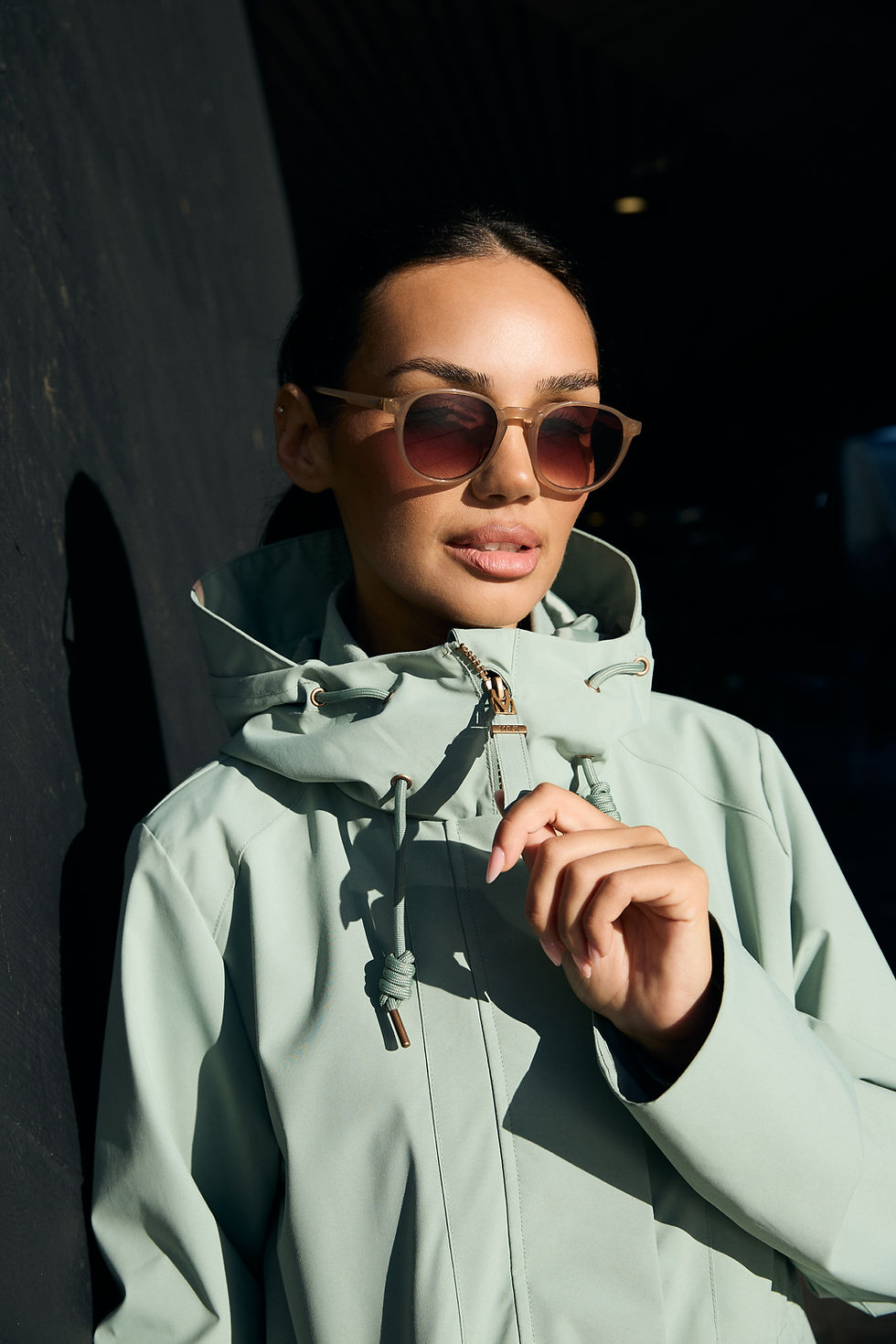
For NAVAHOO, MARIKOO and STONE HARBOUR, this means that we use materials that do not contain per- and polyfluorinated chemicals (PFAS). Our jackets are still wind- and water-repellent: getting caught in a shower on the way to the train is no problem.
Responsibility starts with the materials we use and does not stop with PFAS. All three brands are 100% vegan: no real down, no fur and no animal-derived materials.
Frequently
Asked Questions
About PFAS
in Jackets
What does PFAS-free mean for a jacket?
It means that no per- and polyfluoroalkyl substances are used during manufacturing. Alternative treatments, such as silicone-based finishes, provide the water-repellent effect instead.
Will PFAS in clothing soon be banned?
From October 10, 2026, the EU will ban certain PFAS in textiles, leather, fur and hides, as well as related accessories intended for the general public. In addition, a proposal for a general PFAS restriction is currently being considered at EU level.
Do NAVAHOO jackets contain PFAS?
We use materials that are free from PFAS, meaning they do not contain per- and polyfluorinated chemicals. Our jackets are still wind- and water-repellent.
Is a PFAS-free jacket just as water-repellent?
Alternative treatments, such as silicone-based finishes, provide the water-repellent effect. For city life, commuting and everyday use, water repellency is almost always sufficient. After a few washes, you can refresh the water-repellent effect with a PFAS-free waterproofing spray.
Are PFAS harmful to health?
There are indications of potential risks, as PFAS can accumulate in the human body. A study by the Helmholtz Centre for Environmental Research shows that PFAS can reduce the activity of human immune cells, while the Health and Environment Alliance reports that PFAS may affect fertility and child development.